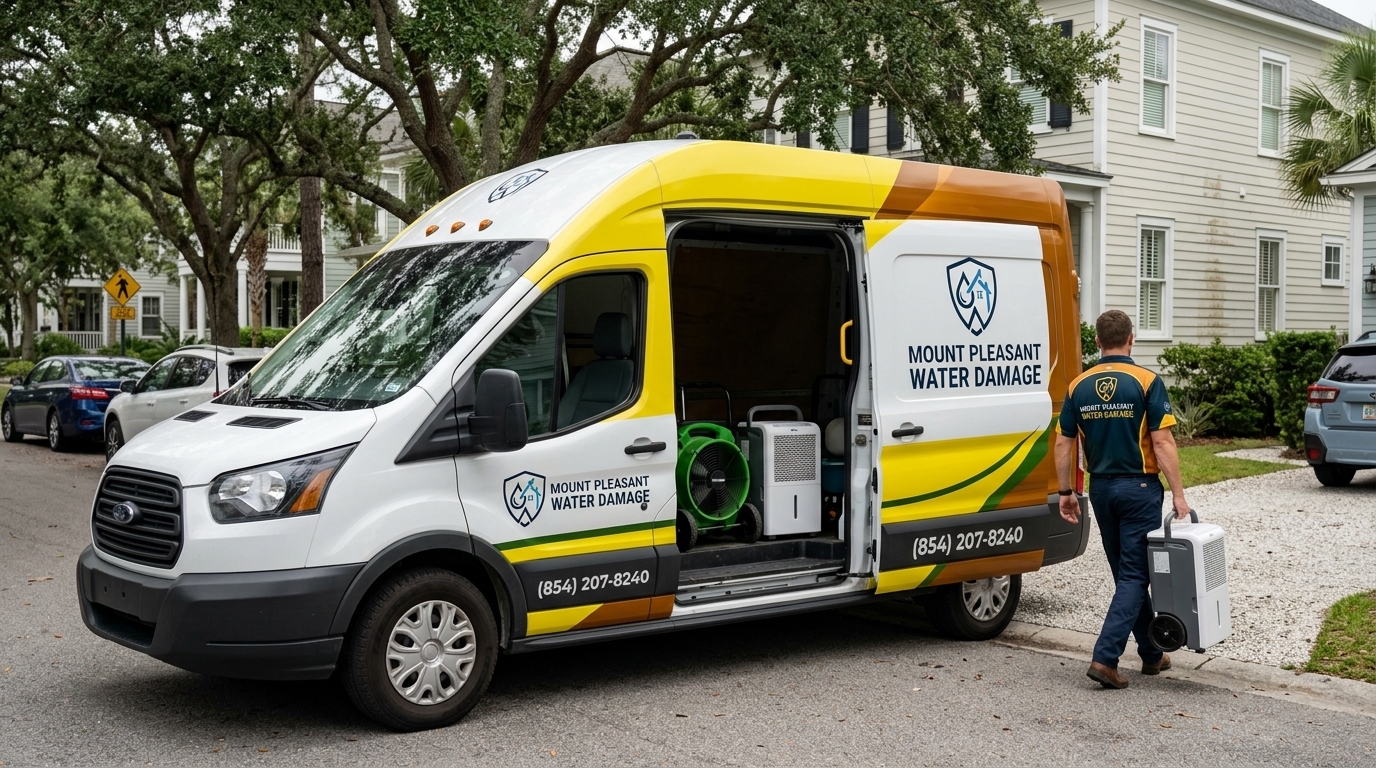
Emergency water extraction when floors are already wet
Emergency water extraction is the fast removal of standing water before it soaks farther into flooring, walls and contents. In Mount Pleasant, that need can follow a burst supply line, washing machine overflow, heavy rain, crawl space water or storm water pushed toward doors and garages.
The goal is not simply to make the room look better. Removing bulk water reduces the amount of moisture that flooring, carpet padding, trim and subfloors continue to absorb. It also makes the next drying steps more effective, especially in humid coastal weather where damp materials can stay wet longer than expected.
What to do before extraction begins
If it is safe, stop the source and avoid electrical hazards. Do not walk through standing water near outlets, appliances or a service panel. Keep children and pets away from water that may contain sewage, storm runoff or unknown contamination. Take photos before moving items if you can do so safely.
Extraction priorities depend on the source. Clean water from a broken supply line is handled differently from water that came through a storm opening or backed up from a drain. If the loss came from plumbing, burst pipe cleanup may be the next related service. If outside water entered during weather, review storm and flood damage.
From standing water to a drying plan
After water is removed, the property still needs moisture checks. Carpet may feel dry on top while padding stays saturated. Laminate or hardwood can hold moisture along seams. Drywall and baseboards can wick water upward. Cabinets may trap damp air behind toe kicks or against exterior walls.
That is why extraction is paired with drying equipment, dehumidification and follow-up checks. Airflow moves moisture from wet surfaces into the air, and dehumidifiers remove that moisture from the space. For hidden wet materials, structural drying helps protect the building after extraction is finished.
When rapid removal matters most
Call for extraction when there is standing water, saturated carpet, soaked hardwood, water under cabinets, a flooded lower level or wet commercial flooring. Quick removal can limit damage and make the rest of the cleanup easier to document, especially when an insurance conversation follows.
Why extraction should not stop at the obvious puddle
Standing water often collects where a floor dips, but the path of travel may be wider. Water can run under baseboards, below cabinets, into closets and toward adjoining rooms. In Mount Pleasant homes with open floor plans or ground-level entries, one wet area can spread farther than expected. Extraction should be followed by checks around the perimeter of the room so the cleanup does not miss soaked padding, hidden edges or water trapped under finished flooring.
What extraction crews need to know
Helpful details include when the water was discovered, whether the source is still active, which rooms are wet and whether the water may be contaminated. Mention hardwood, carpet, cabinets, crawl spaces or rooms below the leak if they may be affected. Those details help the extraction plan match the property instead of treating every wet floor the same. They also help decide whether drying equipment, material removal or claim documentation should begin right away.
Related services
- Water Damage Restoration
- Basement Flood Cleanup
- Burst Pipe Cleanup
- Storm and Flood Damage
- Structural Drying
- Mold Prevention After Water Damage
- Insurance Claims Help
- Commercial Water Damage
Nearby service areas
Mount PleasantOld VillagePark WestCarolina ParkSullivan’s IslandIsle of Palms