Water damage restoration for coastal Mount Pleasant properties
Water damage restoration in Mount Pleasant starts with one practical question: where did the water go after the first room got wet? A supply-line leak, roof opening, storm-driven rain or overflowing appliance can spread beneath flooring, behind baseboards, into cabinets and through ceiling cavities before the damage looks serious from the doorway.
Local conditions make that question more important. Coastal humidity slows evaporation, crawl spaces can hold damp air after heavy rain, and elevated homes may hide moisture below the living level. Older homes near Old Village, townhomes around busy corridors and newer houses in Park West or Carolina Park can all need different drying plans.
What happens first
The first step is source control when it is safe: shutting off a valve, stopping an appliance, tarping a known roof leak or keeping people away from contaminated water. After that, the affected rooms need a careful look at floors, walls, trim, cabinets and nearby spaces. If water traveled through a ceiling, the room below may need attention even when the upstairs floor looks dry.
Bulk water should be removed before drying begins. Extraction lowers the moisture load so air movement and dehumidification can work. For standing water or saturated carpet, see emergency water extraction. For wall cavities, subfloors and trim, the cleanup plan often moves into structural drying.
Drying, cleaning and documentation
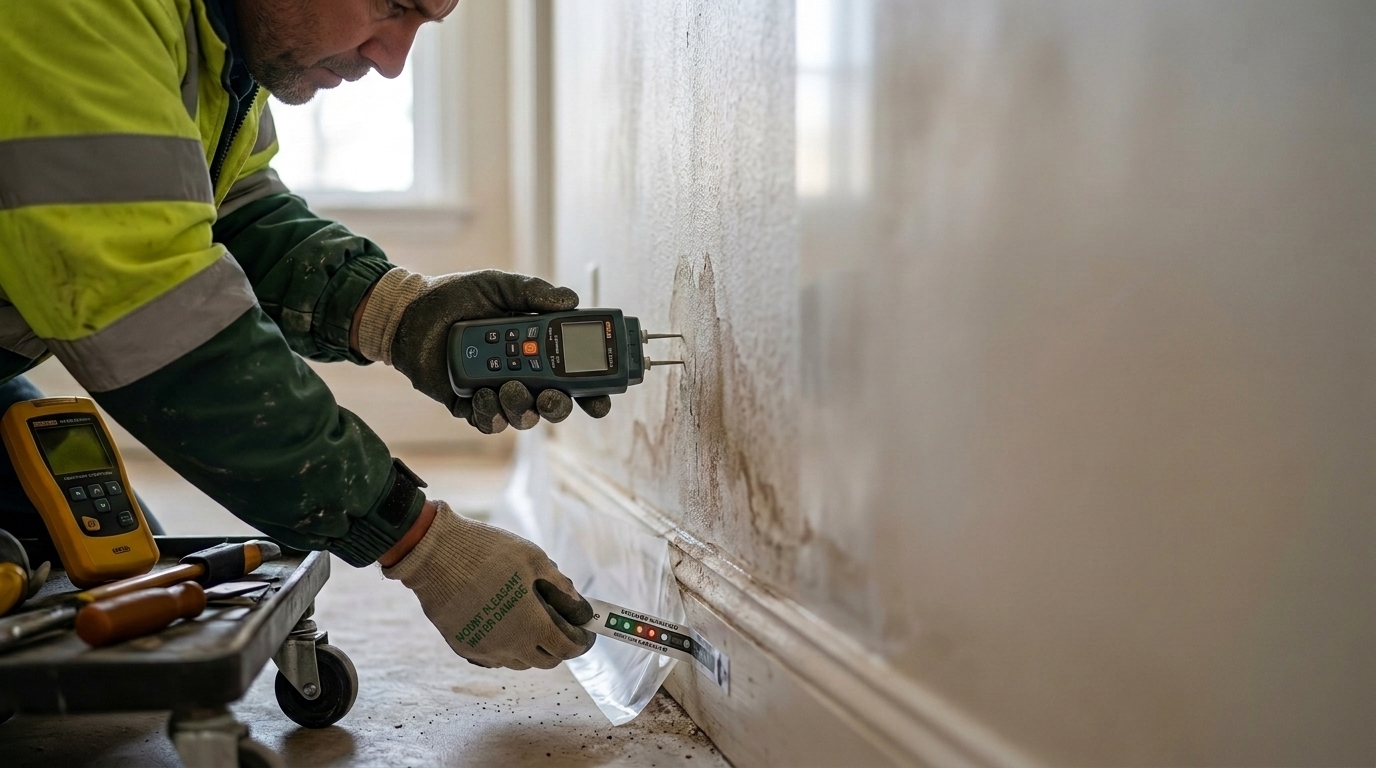
Restoration is a sequence, not a single visit. Wet materials are identified, salvageable surfaces are cleaned, unsalvageable porous materials are removed, and drying equipment is placed where it can move moisture out of the structure. Moisture readings help show whether drywall, wood, subflooring or framing is improving.
Documentation matters for homeowners, property managers and insurance conversations. Photos, room notes, moisture observations and a clear timeline help explain what happened and what was done. If the loss may become a claim, insurance documentation help can keep the repair discussion organized.
When to call for restoration help
Call when water affects more than a small surface spill, reaches walls or cabinets, comes from outside, involves a ceiling leak or leaves a damp smell after cleanup. Mount Pleasant Water Damage can help sort the next step, whether the problem began with a burst pipe, a storm, a soaked crawl space or a leaking appliance.
How coastal conditions affect restoration choices
Mount Pleasant restoration also needs judgment about timing. After a summer storm or a plumbing leak during humid weather, materials may not release moisture quickly without controlled drying. Hardwood floors, cabinet boxes and crawl space insulation can look stable while still holding water. A practical restoration plan keeps the work focused: remove what is unsafe, dry what can be saved, document the affected areas and keep repairs from starting before the structure is ready.
How restoration connects the whole cleanup
A complete restoration plan also keeps related problems from being treated as separate events. If a pipe break caused the loss, cleanup may need both plumbing-source notes and drying records. If a storm opened the roof or pushed water through a door, the plan may include temporary protection and follow-up checks after the weather clears. For homes on or near barrier-island routes, returning the property to normal often means coordinating extraction, drying, cleaning and documentation in one clear sequence.
Related services
- Emergency Water Extraction
- Basement Flood Cleanup
- Burst Pipe Cleanup
- Storm and Flood Damage
- Structural Drying
- Mold Prevention After Water Damage
- Insurance Claims Help
- Commercial Water Damage
Nearby service areas
Mount PleasantOld VillagePark WestCarolina ParkSullivan’s IslandIsle of Palms