Structural drying for hidden moisture
Structural drying begins after the obvious water is gone. In Mount Pleasant homes and businesses, moisture can remain in drywall, framing, subfloors, trim, cabinets, insulation and crawl space materials even when the room looks clean. If those materials stay damp, repairs can be delayed and odors can develop.
Coastal humidity makes controlled drying especially important. Opening windows is not a drying plan when outside air is damp. The building needs airflow, dehumidification and moisture checks that match the materials affected by the loss.
Where moisture hides after water damage
Water can wick up drywall, settle under hardwood or laminate, run below cabinets, collect behind baseboards and move into rooms next to the original leak. Crawl spaces and elevated homes add another layer because moisture below the floor can affect the living area above. Slab homes may hide water at flooring seams and wall bottoms.
Structural drying is often paired with water damage restoration after a larger loss. If standing water is still present, emergency water extraction usually comes first so the drying equipment is not fighting unnecessary bulk water.
How the drying plan is built
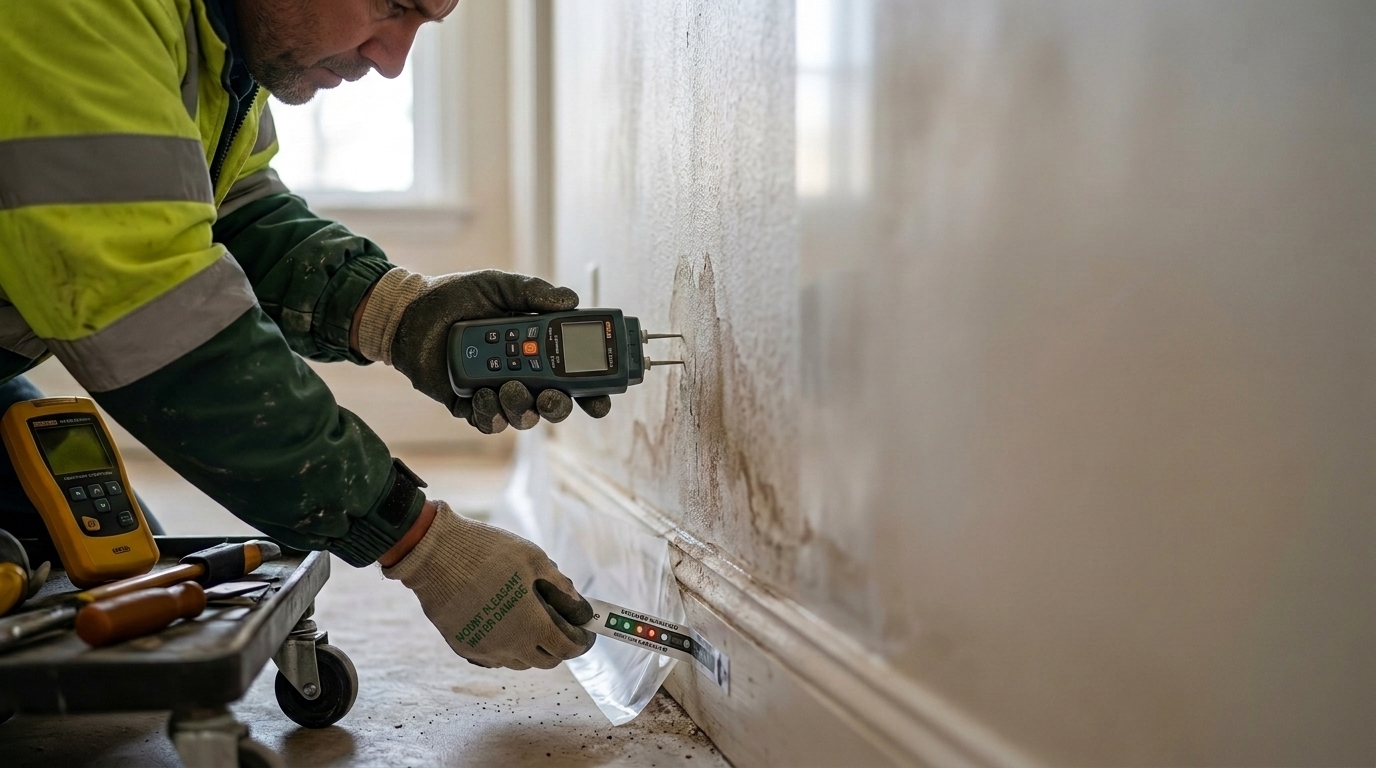
The plan starts with moisture readings and material checks. Some materials can dry in place. Others may need limited removal so trapped moisture can escape. Air movers create movement across wet surfaces, while dehumidifiers remove water vapor from the air as materials release moisture.
Drying should be monitored rather than guessed. A room can feel comfortable while a wall cavity or subfloor remains wet. Follow-up readings help show whether equipment placement is working and whether additional access is needed. That information also helps property owners understand the timeline before repairs begin.
When structural drying matters most
Call for drying help when water reaches walls, cabinets, subfloors, crawl spaces, trim or rooms below the leak. It is also useful after burst pipe cleanup, lower-level flooding, storm intrusion and commercial losses where reopening quickly matters. Proper drying can reduce unnecessary demolition while still dealing honestly with materials that cannot be saved.
Drying should be measured, not guessed
Structural drying works best when progress is checked instead of assumed. Equipment may need to be moved, added or removed as materials release moisture. A wall bottom, toe kick or subfloor can lag behind the rest of the room. Monitoring gives homeowners and managers a clearer reason for the drying timeline and helps avoid repairs over wet materials. That is especially useful in Mount Pleasant when humid weather slows natural drying.
Why drying supports cleaner repairs
Repairs are only as good as the surface beneath them. Paint, flooring and cabinets installed over damp materials can lead to odor, swelling or failed finishes. Drying records give the repair stage a better starting point because they show what areas were affected and how the materials responded. For rental homes, businesses and occupied houses, that clarity helps everyone understand why equipment is running and when the next trade can begin.
That record can prevent rushed repairs and repeated drying problems.
It also helps identify which rooms are ready for repair and which need more drying time.
That matters locally.
Related services
- Water Damage Restoration
- Emergency Water Extraction
- Basement Flood Cleanup
- Burst Pipe Cleanup
- Storm and Flood Damage
- Mold Prevention After Water Damage
- Insurance Claims Help
- Commercial Water Damage
Nearby service areas
Mount PleasantOld VillagePark WestCarolina ParkSullivan’s IslandIsle of Palms