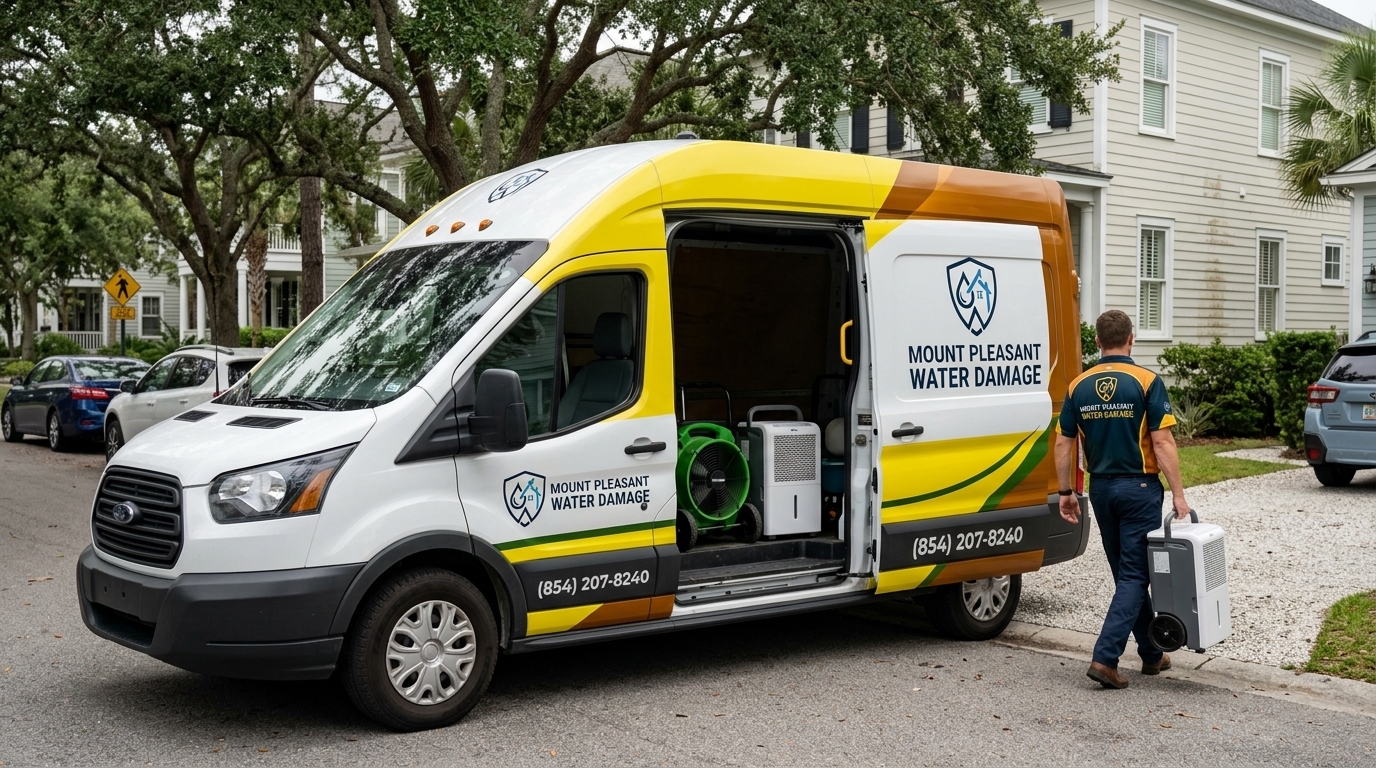
Charleston water damage response
Charleston water damage restoration needs practical decisions because the building stock and water sources vary widely. A downtown residence may have older plumbing, tighter wall cavities, plaster, hardwood or historic trim. A rental, shop or small commercial space may need cleanup planned around access, tenants, inventory and customer-facing areas. A nearby residential property may be dealing with a roof leak, appliance failure or storm water moving in from outside.
Mount Pleasant Water Damage serves Charleston-area calls with the same core goal: remove water, identify hidden moisture, dry affected materials and help the property return to clean, usable condition. The page connects Charleston property owners to extraction, burst pipe cleanup, storm damage cleanup, structural drying, mold prevention and documentation guidance.
What to do first after water damage in Charleston
Start with safety. Avoid standing water near outlets, panels, appliances or extension cords. Do not walk beneath sagging ceilings. Keep children and pets away from water that may involve sewage, storm runoff or outdoor flooding. If the source is a plumbing fixture and you can reach the shutoff safely, stop the water before moving contents.
Take photos from a safe place, note when the water was discovered and list affected rooms. If the property is a rental or commercial space, document access instructions and any business operations that may be affected. Those details help organize the response and support later insurance conversations.
Storm water, older materials and hidden moisture
Charleston properties can hold moisture in hard-to-see places: beneath hardwood, behind baseboards, inside cabinets, through ceiling cavities, in crawl spaces and around exterior openings. Humidity and older materials can slow drying when airflow and dehumidification are not controlled. Mopping the floor or opening windows is rarely enough for a larger water loss.
Emergency water extraction removes bulk water first. Structural drying follows with air movers, dehumidifiers and moisture checks. If the water came from outside flooding or sewage, cleanup may also involve contamination precautions and material removal. The right plan depends on the water source, the rooms affected and the condition of the materials.
Charleston services and nearby service areas
Charleston property owners may need water damage restoration after a whole-room loss, emergency water extraction for standing water, burst pipe cleanup for sudden plumbing failures, storm and flood damage cleanup after heavy rain, structural drying for wet walls and flooring, and mold prevention once moisture is under control. This page links to each service and to nearby communities around Mount Pleasant, Sullivan’s Island, Isle of Palms and Daniel Island.
Services available in Charleston, SC
- Water Damage Restoration: full cleanup, drying and restoration planning after leaks, storms and plumbing failures.
- Emergency Water Extraction: standing water removal for soaked floors, flooded rooms and active leaks.
- Basement Flood Cleanup: lower-level, garage and crawl-space flood cleanup where water has spread.
- Burst Pipe Cleanup: response for broken supply lines, wall leaks, ceiling leaks and water heater failures.
- Storm and Flood Damage: cleanup after heavy rain, wind-driven water, roof leaks and coastal flooding.
- Structural Drying: drying support for wet drywall, subfloors, trim, cabinets and hidden cavities.
- Mold Prevention After Water Damage: moisture control after damp materials, leaks, floods and humid conditions.
Nearby service areas
Mount PleasantOld VillagePark WestCarolina ParkSullivan’s IslandIsle of PalmsDaniel Island